
In 2025, the Foundation for Justice and Development Initiatives (FJDI) navigated a challenging landscape marked by limited funding, yet achieved significant milestones in promoting transitional justice, community memorialization, and advocacy in northern Uganda. Our core focus remained on the Democracy, Governance and Transitional Justice Program, where we partnered with the International Centre for Transitional Justice (ICTJ) to assess community perspectives on the ICC's confi rmation of charges against Lord's Resistance Army (LRA) leader Joseph Kony in absentia.
In 2024, FJDI strengthened its role as a leading voice in transitional justice, reconciliation, and post-conict
recovery in Northern Uganda. Through the project “Strengthening Transitional Justice and Post-Conict
Recovery in Northern Uganda” (Oct 2023 – Sept 2024), supported by the International Development Law
Organization (IDLO), FJDI advanced justice for victims while simultaneously addressing the economic and
social dimensions of recovery.
In the year 2023, The Foundation for Justice and Development Initiatives (FJDI) continued making progress towards the realization of transitional justice initiatives for conflict survivors in northern Uganda. FJDI’s activities for 2023 were implemented under three main projects and involved various advocacy engagements with like-minded partners. This report highlights the organization's objectives, key program areas, detailed implemented activities and overall success areas achieved during this period. FJDI achieved progress in various areas as listed below.
This study takes stock of victims’ groups/associations following which these were categorized by different conflicts that occurred in the region over the years, the needs of victims, and whether victims’ needs have evolved. The study covered the greater Northern Uganda region, extending to West Nile and Teso.
The transitional justice landscape in Uganda continues to present an interesting scenario. On the one hand, it promises so much, as demonstrated by developments such as the approval of the national transitional justice policy (NTJP), and the pursuit of accountability for war crimes and crimes against humanity...
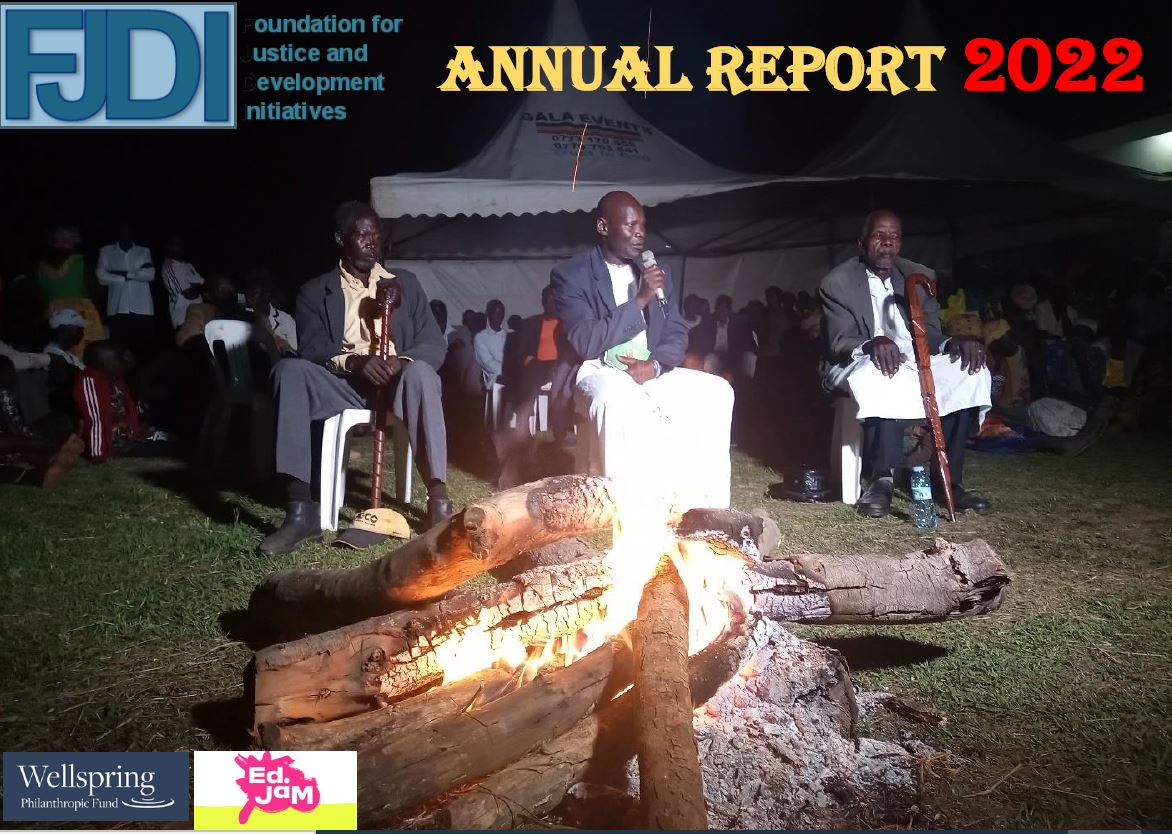
During this reporting period, FJDI implemented two projects aimed at promoting debate and dialogue on transitional justice (TJ) in Uganda. In partnership with the Rwenzori Forum for Peace and Justice (RFPJ) and other TJ actors, FJDI worked to reawaken the debate on TJ and follow up on ongoing TJ processes...
2020 was a landmark year for transitional justice in Uganda. Amidst the outbreak of the COVID-19 pandemic, the trial of Dominic Ongwen concluded with closing statements from the prosecution, defense, and victims’ representatives. A ruling is expected in early 2021
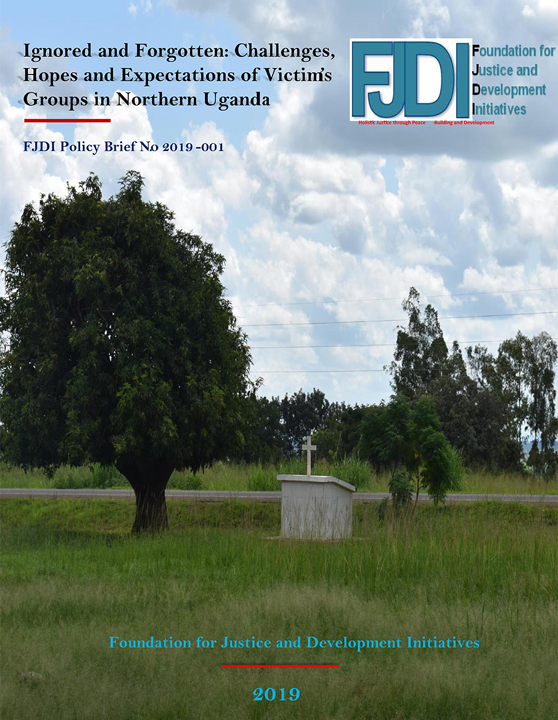
This report is based on the findings from an assessment of 32 victim associations across Northern Uganda. The assessment highlights the most common, critical needs and challenges faced by the victims’ associations in the region. These needs and challenges range from financial needs, to the need for ...
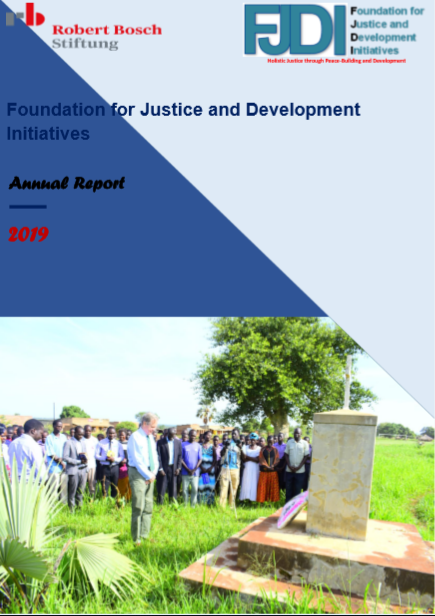
This year 2019, FJDI’s lead project was building the capacity of victims’ association in northern Uganda and supporting memorial events in communities that experienced massacres across northern Uganda and West Nile regions. In this reporting period FJDI worked with over 32 victims’ associations across northern....
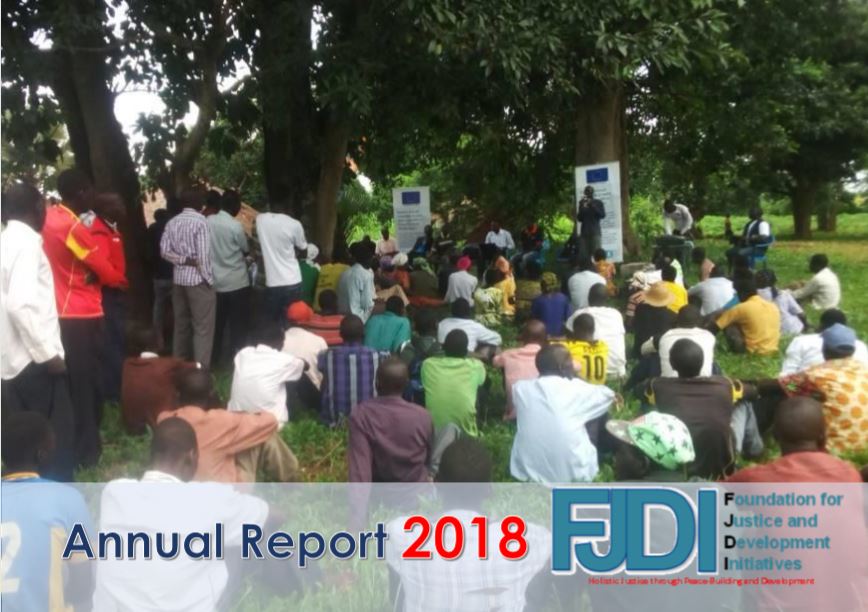
Northern Uganda’s trajectory to recovery has remained steady since the conflict ended in 2006. The region is without doubt experiencing massive socio-economic transformation as demonstrated by the rehabilitation and rebuilding of infrastructure that was destroyed during the conflict.
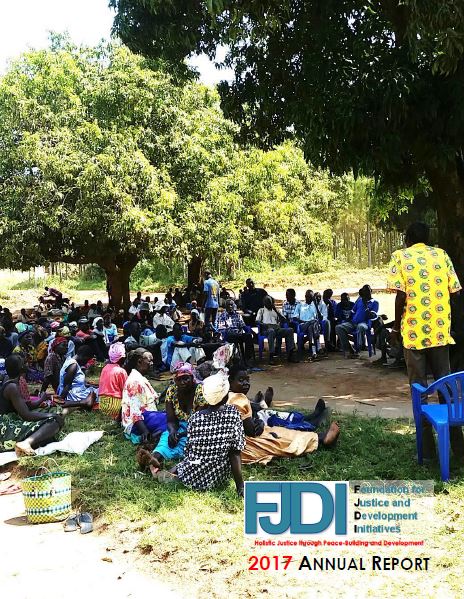
Another year gone by! A year of exceptional progress and growth for FJDI. This annual report presents brief highlights of the many initiatives implemented, and the impact made. In November 2015, FJDI opened shop in a one-roomed office in Gulu Town, with one staff, no donors, and not many assets.